During the past 24+ hours EBFC Volunteers have responded to numerous calls for help. Several of these were for Carbon Monoxide Alarms. In some cases, a generator was the cause of the incident. We think it is important enough to remind you of the following safety tips when using generators:
To avoid Carbon Monoxide Hazards:
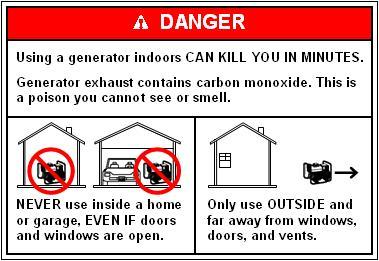
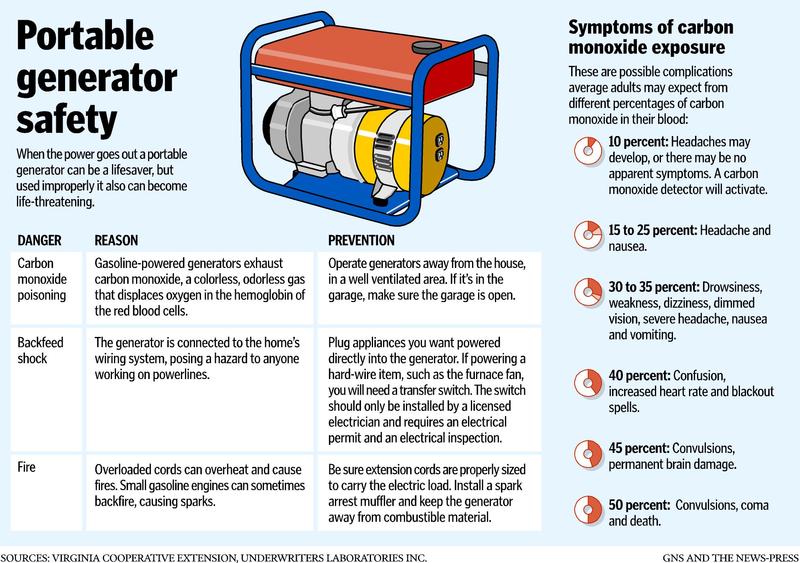
• Always use generators outdoors, away from doors, windows and vents. The further from the house the better.
• NEVER use generators in homes, garages, basements, crawl spaces, or other enclosed or partially enclosed areas, even with ventilation.
• Follow manufacturer's instructions.
• Install battery-operated or plug-in (with battery backup) carbon monoxide (CO) alarms in your home, following manufacturer's instructions.
• Test CO alarms often and replace batteries when needed.
To Avoid Electrical Hazards:
• Keep the generator dry. Operate on a dry surface under an open, canopy- like structure.
• Dry your hands before touching the generator.
• Plug appliances directly into generator or use a heavy-duty outdoor- rated extension cord. Make sure the entire extension cord is free of cuts or tears and the plug has all 3 prongs, especially a grounding pin.
• NEVER plug the generator into a wall outlet. This practice, known as backfeeding, can cause an electrocution risk to utility workers and others served by the same utility transformer.
• If necessary to connect generator to house wiring to power appliances, have a qualified electrician install appropriate equipment. Or, your utility company may be able to install an appropriate transfer switch.
To Avoid Fire Hazards:
• Before refueling the generator, turn it off and let it cool. Fuel spilled on hot engine parts could ignite.
• Always store fuel outside of living areas in properly labeled, non-glass containers.
• Store fuel away from any fuel-burning appliance.
Also view the following video on where to place your generator and how wind can effect the flow of exhaust and CO.
Stay warm... and safe! |






 Add a Comment